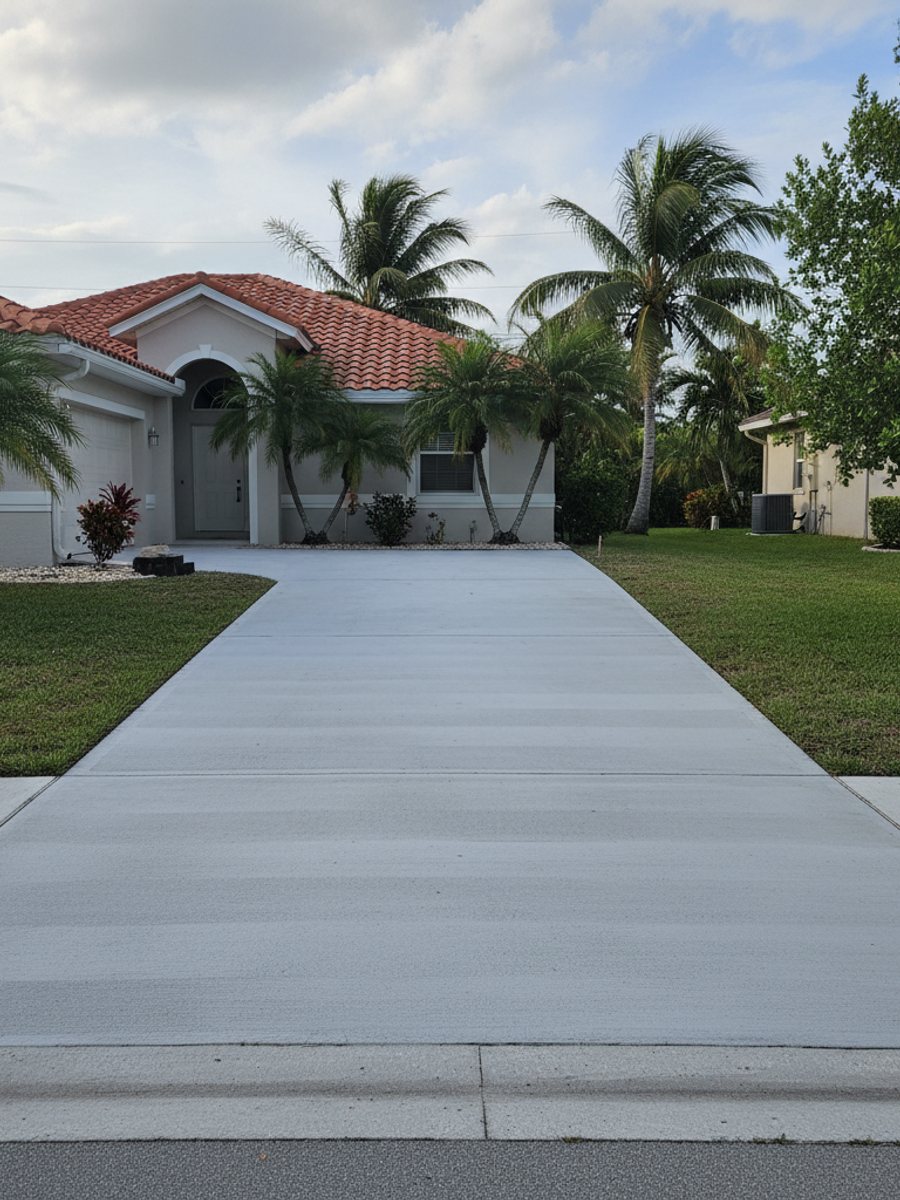
People ask us this a lot, usually while they're standing in their driveway looking at a crack, wondering if they should just wait until things cool off. The honest answer is that concrete can be poured here almost any month of the year. Florida doesn't freeze the ground the way it does up north, so we're not dealing with a hard shutdown season like a contractor in Ohio. But that doesn't mean every month is equal. The conditions here still push the work around, they just push it differently.
What summer actually does to a pour
June through September is our rainy season, and it's also the hottest stretch, with afternoon temperatures regularly in the low 90s and humidity to match. Heat speeds up hydration, which sounds like a good thing, but it means the surface of a slab can start setting before the crew has finished floating and finishing it. That's how you get plastic shrinkage cracking, those fine hairline cracks that show up within hours of the pour, not months later. We manage it by pouring early, sometimes starting before 7am, using evaporation retardants when the sun's already up, and misting the surface if the wind picks up. It's manageable. It just takes more attention than a cooler month does.
The bigger issue in summer is the afternoon thunderstorm. Almost every day from June to September, you can count on rain rolling in sometime after 1pm. A fresh pour that gets hit with a downpour before it's had a few hours to set can wash out on the surface, leaving it pitted or discolored. We watch the radar the morning of a pour and we'll push the schedule rather than take the risk. That's part of why summer jobs sometimes get rescheduled a day or two out, it's not us being difficult, it's us not wanting to redo your driveway.
Why the dry season is the easier window
November through April is Port Orange's dry season. Rain is less frequent, humidity drops, and daytime temps sit in the 70s more often than not. That's about as close to ideal pour weather as we get here. Slower evaporation gives the finishing crew more working time before the surface sets up, which matters most on anything with detail work, like stamped concrete or exposed aggregate, where the pattern has to go in while the mix is still plastic enough to take it. Cooler nights also mean a more even cure over the first 48 hours, which is when a slab is most vulnerable to surface damage.
There's one thing to watch for in winter here, and it's the opposite problem from summer. A cold front can drop nighttime temps into the 40s, occasionally lower, and a slab poured right before one of those nights will cure slower than expected. It's rarely a real problem, we just adjust the mix or push out when you can drive on it, usually from the standard 5 to 7 days out to something closer to 10.
What the ground here is doing underneath all of this
Port Orange soil is mostly sandy, which drains well most of the year and makes for decent, predictable compaction under a slab. The catch is the water table. We're close to Spruce Creek and the Halifax River, and in low-lying lots, especially older ones near Ridgewood Avenue, the water table can sit closer to the surface during the rainy months than people expect. If we're excavating for a new slab foundation or a pool deck in August after two weeks of storms, we may hit saturated soil a foot or two down that wouldn't be there in March. That changes how we compact the base, and sometimes means bringing in extra fill or waiting a day for things to drain before we pour. It's one more reason the dry season tends to be the smoother build, less improvising on-site.
Older streets versus newer subdivisions
A lot of the housing stock in the older parts of Port Orange, closer to US-1, went in during the 50s and 60s, and those original driveways and walkways were often poured thinner than what we'd use today, sometimes 3 inches with wire mesh instead of rebar. If you're replacing one of those, we're not just matching what's there, we're usually bringing it up to a 4-inch slab with rebar on the joints that carry the most load, like where a car's tires actually sit. Newer subdivisions west of I-95, places like Waters Edge or the Spruce Creek area, were built on more consistent modern base prep, so repair or resurfacing work there tends to be more straightforward. It's worth knowing which category your lot falls into before you get a quote, because it affects both the scope and the price.
Permits, HOAs, and timing your project around them
Most driveway, patio, and slab work in Port Orange goes through a city building permit, and larger jobs near canals or wetland buffers can trigger a setback check. That paperwork takes time regardless of season, so if you're aiming for a specific month, it helps to start the permit process 3 to 4 weeks ahead. HOAs are common in the newer subdivisions and some of them have their own approval step for anything visible from the street, which stamped concrete and colored finishes usually are. Older neighborhoods off Ridgewood tend not to have an HOA at all, which simplifies things but doesn't skip the city permit.
So when should you actually book it
If you have flexibility, November through April gives you the most forgiving conditions, easier cure, fewer weather delays, and better working time for detail finishes. If summer is your only option, it's still doable, we just build in more buffer for weather and schedule pours earlier in the day. What matters more than the calendar month is having a crew that reads the conditions on the actual day and adjusts, rather than pouring on autopilot. That's the part of this work that doesn't change season to season. If you want to talk through timing for your specific project, PFL Concrete Co. can walk through what your lot and your schedule actually call for.